Showing posts with label Writer. Show all posts

Friday, June 2, 2017

Interview with Corinne Morier

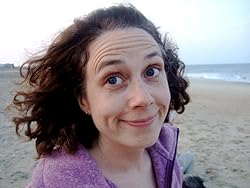
This month's interview is with Corinne Morier, also known as the Meme Queen!


Kristen - What is your favorite part of the book you're working on now?

Corinne - I think my favorite part is in chapter seven, when Ceruden is questioned by the spirit of the river. I was sort of inspired by a subplot in an anime I watched and wanted to expand upon the idea of a spirit living in the river that never stopped asking questions. Although I was also scared to death that it wasn't believable enough, so just the other day when I received feedback on it from one of my critique partners, I was so happy when she said that it added a fun layer of complexity to the world I'd created.


Kristen - What literary character do you relate the most to?

Corinne - I definitely relate most to Hermione from the Harry Potter series. We're so alike it's scary. I was also the bookish outcast who loved school and ended up the favorite of several of my teachers. And the scene in Harry Potter and the Sorcerer's Stone when they're in their first day of Potions class and Snape is asking Harry a bunch of questions that he doesn't know how to answer, and meanwhile, Hermione is sitting on the edge of her seat frantically waving her hand in the air because she knows the answer to the teacher's questions is exactly like how I was back in school.

Kristen - What do you hope readers will take away from your book?

Corinne - I just want people to walk away from my book having enjoyed the story. I don't really care if it's a character, or a certain part of the story, or even just a certain line that sticks with them. I just want to write stories that remain in peoples' heads long after they turn the final page.

Kristen - That's definitely a hope I can empathize with. The feeling that someone enjoyed your story, no matter what aspect of it, is so inspiring and makes it all feel worthwhile.


If you could have any superpower, what would you choose and why?

Corinne - I think I'd want to fly. Cliched answer, I know, but it just seems like so much fun to soar through the air.

Kristen - And no worrying about traffic! Getting to places would be faster because you could fly straight there instead of zigzagging.


What's the hardest thing about writing?

Corinne - Motivating yourself to sit in the chair, day after day, and bang out words onto a keyboard that make some semblance of sense in the hopes that someone somewhere will be entertained by them.


Kristen - Very true! Especially if you have so many other things that you want to do as well, or have to do, it can be hard to make time in a day to just write.

Thank you for joining me today, and I can't wait to see how your novel turns out!

Corinne Morier is a bibliophile-turned-writer with a penchant for writing stories that make readers think. In her free time, she enjoys blogging, playing video games, and swimming. Her motto is “Haters gonna hate and potatoes gonna potate.” 

Like her on Facebook!

Friday, May 5, 2017

Interview with Allie May

This month's interview is with Allie May, writer and blogger!


Kristen - Where is your favorite place to write?


Allie May - My recliner used to be the best place to sit and write. I love writing with my feet up, and the chair was so comfortable. But it’s currently in storage. When I’m at work, I’m stuck at a desk and it’s not comfortable at all. Now I have a chair support for my bed that I use when I write on my days off work.


Kristen - Do you think that the cover plays an important part in the buying process?

Allie May - Absolutely. For example, if a book has a shirtless guy on it, then I won’t buy it. I’m also tired of the girls in awkward positions trying to look natural on covers.

Here’s what I want my book cover to look like. It looks kind of like a textbook which I think makes it stand out more on the shelf. But ultimately the publisher gets to decide what it looks like.


Kristen - I also think knowing your audience plays into it. I feel like I'm attracted to certain kinds of covers, and that it's a great first impression aspect that authors and publishers can use to say "my book is the kind of book people who enjoy x type of fiction will love". 

And I'm so with you on the shirtless men photos! Or the headless people, where they just took a picture from the neck down. Those aren't deal breakers, but I spend too much time wondering where their heads went.


Does your book use any references to mythology or real-world folklore, or does it contain its own folklore?

Allie May - One of my favorite parts of Powerful is the mythology that I was able to create for each kingdom. They each have their own creation myths that I based off real world religions. One is a monotheistic religion with a prophet that I based off Islam. One is a polytheistic religion that I based off Indian and Japanese religions. One is kind of a Native American inspired religion where the elements themselves are gods. It was probably my favorite thing to write out of the whole book.


Kristen - What part of your writing time do you devote to marketing your book?

Allie May - I’m not really marketing books right now, since I don’t have anything published yet, but I do spend a lot of time marketing myself. I make sure to use social media once a day, and I try to come up with funny and entertaining things to post that will make readers like me when I do have something to offer. For example, I’ve started putting funny quotes that I say onto photos and sharing them.


Kristen - Even marketing yourself can take a lot of effort. So it's great that you've started now and are trying to show future readers who you are as a person. 


What’s your views on social media for marketing, and which of them have worked best for you?

Allie May - I love using social media to market. I’m a total introvert, and I hate talking about myself, but social media has really been a great way for me to connect with other writers and readers. I love Facebook because it’s easy and I already know how to do it, but I’ve also *reluctantly* started to see the value in Twitter.

Kristen - It's a lot of time to build connections, so it's great that you're enjoying the process and getting out there and meeting people. Everything's easier if you find pleasure in it. 

Thank you for letting me interview you, and I can't wait to see Powerful published!


I am Allie May, fantasy author and mother of the world’s cutest dog. I run the blog, Hypergraphia. Hypergraphia means the overwhelming and uncontrollable impulse to write, and I combat it by writing fantasy novels and blogging twice a week. When I’m not writing or working, I’m usually at Disneyland. I’m currently editing my novel, Powerful, while working on another novel that I started when I was twelve called A Fairy’s Tale. On the weekends, you might catch a glimpse of me in the shadows as a lightsaber-wielding superhero. Maybe.

Don't forget to check out Alyson on all her social media!


Like her on Facebook!
Follow her on Twitter!
Follow Alyson on Google+!
Follow her on Pinterest!
Keep up with Alyson on her blog!

Friday, April 14, 2017

Author Interview with Sue Seabury!

Let's welcome YA author Sue Seabury!


Kristen - Hi Sue! Thanks for dropping by. First questions of the day! How often do you write? Do you have a special time during the day to write?

Sue - I write every morning, and maybe snatch a few minutes later in the day to work on editing.

Kristen - Ah that's the opposite schedule from mine! I write late at night when everyone is sleeping. Though I do also try and snatch those precious moments during the day if there's a lull in activity.

Do you aim for a set amount of words/pages per day?

Sue - No. My preference is to finish a scene in one sitting, but that isn’t always possible.
Kristen - Do you write on a typewriter, computer, dictate or longhand?

Sue - Computer. My handwriting is officially illegible.

Kristen - Mine too! Besides, it all needs to go on the computer eventually so I might as well save myself some time. Not to mention I type way faster than I write.

Where do your ideas come from?

Sue - Where don’t they come from? Anything I see, hear, etc is fair game. Look out. I’m collecting ideas from you right now.

Kristen - Eep, I'll be careful then. I knew there was a reason I made sure my socks were matching for this interview! 

What are your ambitions for your writing career?

Sue - To be #1 on the NYT bestseller list . . . What? That’s not everyone’s ambition?

Kristen - Haha, I'm sure most writers at least hope that's in their future! I think if I made it anywhere near the top 10 I'd think it was a dream. 

Thank you so much for joining me today!

Sue Seabury enjoys travel, good food and great conversation. Since she doesn't often get to do any of these things, she writes about them in her books.

Follow her on Twitter.
Learn more about Sue on her blog.
Find her books on Amazon.

Friday, April 7, 2017

Interview with H.S. Cook

This month's interview is with H.S. Cook. First, a little bit about her.

Working in a world of logic and reason, while dreaming of one filled with magic, H.S. Cook lives between her scientific research and her fantasy writings. A molecular biologist by day, she finds ways to inject the magic of her worlds into daily life, making time to write. She is currently working on an epic fantasy series: The Blood King Chronicles.

On now to the interview.

Kristen - Do you remember the first story you ever read, and the impact it had on you?
H.S. - The first story I was given to read was a series of Wind in the Willows books. It was before I went to school, but they were not oversimplified. It was published as a box set of 9 books, so the individual books were short and easy to manage. I remember reading them and getting lost in the adventures of Rat, Mole, Badger and Mr. Toad. I loved those books so much, and they started my life of reading. I still have them today!
Kristen - I only remember reading one story from Wind in the Willows. So I at least know who people are talking about, though I didn't get to enjoy all the same adventures as you did. Mr. Toad is quite the character!


What was the first thing you remember writing?
H.S. - I am sure we had assignments before this, but the first thing I remember was a two-line story for school that had to start: ‘In the dark, damp basement…’ I do not remember it exactly, but in two lines I was eaten by a massive hairy spider.
Kristen - And later that night you probably wondered why you had nightmares! At least you managed to pack a riveting ending into two lines.  


What do your friends and family think of your writing?
H.S. - Generally, they are supportive. They understand that I need to write. I would like to say that they enjoy it, but that may be friends and family just being nice.

Kristen - What are your thoughts on good/bad reviews?
H.S. - I crossed out good/bad there because a review is an opinion, whether good or bad. I appreciate honest reviews. I do not care whether it is loved or hated – I cannot force people to like what I write. I only ask that they are honest and representative of your actual opinions.
Reviews left with an agenda, or jumping on the bandwagon, are not helpful to other readers or to the writer. They are a waste of space.

Kristen - Which famous person, living or dead would you like to meet and why?
H.S. - Writers – Tolkien. He is my idol. Non-writer – Rosalind Franklin. She is one of my many idols in science and was vastly under-appreciated at the time. X-Ray Crystallography is vital to my current research!
Kristen - I'm so glad I got to learn more about you. And you're a Tolkien fan too! Thank you for answering some questions for me.
Thank you for taking the time to talk with me.
By the Blood, may the Fates show mercy.
H.S. Cook

Check out her website!
Follow her on Twitter and on Facebook!

Friday, March 17, 2017

Interview with JR Creaden

This month's YA writer is JR Creaden! Let's jump right in.

Kristen - Did you have any ideas about being a writer that becoming a writer changed?

JR - Perhaps it was those summers spent in Maine reading Stephen King, but I imagined writing as a more solitary experience than it’s been for me. Instead, I’m involved with more writers than I ever dreamed possible—exchanging stories and tips, brainstorming, commiserating, researching. I talk to more writers everyday than I knew existed before.

Kristen - I was much the same way. I assumed writers holed up in caves and never spoke to anyone, but for me it has been a lot of interaction with other writers and discussing the craft and brainstorming. 


What do you do when Real Life intrudes on your writing?

JR - As in when the characters are too much like their real life counterparts? That’s happened a few times, but then I call up the facts and reorganize my thoughts. The characters are unrelated and from alien worlds that didn’t even coexist in the same time periods prior to coming aboard the ship (where the story begins in Re: Morse). Also, none of them had parents, so their core problems—personality or otherwise—have to be addressed by themselves. I am their author, not their parent.


Kristen - Do you have a favorite scene or line you’ve written?

JR - I do! The scene when Relativity’s crew performs a Vincil play, Renderings, for the cadets. I’ve been pressured quite a bit to drop the scene, but I’ve stuck to my guns. The play, which is not exactly “children-oriented” any more than Romeo and Juliet, and the character reactions to the play, are essential to the plot of the whole series.

As an educator and a parent, I believe it’s important for our literature to expand our familiarity with different media. Students of all ages are expected to read, perform, and engage with theater, and using theatrical performance within literature is a fantastic method to model a universal experience. 


Kristen - Tell us about your main character’s weaknesses. How do these affect the first book of your series?

JR - In Re: Morse, the main character, human Hugo Morse is plagued by self-doubt. While we don’t go into major detail about Hugo’s background, certain elements haunt him. Despite the utopian version of Earth he remembers, Hugo’s experiences were not so pleasant. His upbringing within the Syndicate, raised on space ships before being deposited at the Rodanbary Academy, was rather lonely. His fear of failure holds him back and puts everyone in danger.


Kristen - What do you want your tombstone to say?

JR - “Free Fertilizer ↓” I wrote a poem ages ago about my wishes for after death called “Bury Me Standing” all about how I’d like to be buried Bene Gesserit style—upright, wrapped in linens, with a fruit tree planted over me. It might sound morbid, but I have no qualms about death, about the function of my physical body after death. I can’t stand the idea of being put into a sealed box, where my matter is isolated from the Earth that sustained me. I want to give back.


Kristen - Thank you so much for stopping by and sharing! If you'd like to find out more about JR, follow any of the links below!

Check out her Website
Follow her on Twitter
Follow her on Facebook

C:\Users\Jessica\Pictures\JR creaden.jpg
JR began her writing career as a child disgruntled with song lyrics. After some early success with poetry and essays, she spent decades distracted by songwriting and academia until her story dreams became too interesting to keep to herself. Re: Morse, the first book in JR’s YA scifi series Contact Files, will soon be ready for public consumption or vivisection. Her goal is to share stories that inspire readers to embrace cultural diversity, the promise of science, and the value of humor and imagination to build a future that’s more Star Trek and less 1984. When she’s not writing, JR enjoys exchanging “your mama” jokes with her children, floating in lakes, and slaying virtual dragons.

Friday, March 3, 2017

Interview with Krisna Starr

This month I'm interviewing fantasy writer Krisna Starr who also happens to be a good friend of mine. Krisna sneaks her writing in around parenting her two adorable children and is currently working on her novel Dragons of Atlantea.


Kristen: What drew you to write in this genre?

Krisna: I’m an avid reader of almost all genres – mystery, thriller, sci-fi, YA, but my all-time favourite is fantasy. From the time I can remember, I’ve been fascinated by magic, different worlds and fantastic creatures like dragons, mermaids and unicorns. When I read novels featuring them, I get transported to their magical world and get to meet them :)

LOL! Who wouldn’t love to fly upon a dragon’s back, ride a unicorn or uncover the treasures of the ocean with mermaids?

Kristen: Fantasy is my favorite too! All the magical creatures and worlds, not to mention you have the freedom to create more and not be limited by our world.


When did you decide to become a writer?

Krisna: 
I don’t remember when it became a conscious decision. I’ve always been making stories in my head. After reading a fascinating book by Enid Blyton in my eighth grade, I started penning down my own story. But it was just for my entertainment. I had no wish to share it with any one. One story lead to another and before I knew it, the passion for writing overtook my life.
Kristen: What is your favorite motivational phrase?

Krisna:


Kristen: Do you think that the cover plays an important part in the buying process?

Krisna: Definitely. I think an alluring book-cover is one of the major hooks for a reader. Many times, people think of a hook in terms of a great prologue or chapter 1. But it is much more than that as I described in my blog post on “Elements of a Strong Hook”.

Before a reader reads our chapter 1, his attention has to be grabbed in some way to entice him to pick the book, have a look at it.

When I go into book stores or browse through amazon, two things grab my attention – the book cover and a catchy title. If I’m hooked by them, then I read the back blurb and the excerpt.

So a great cover translates definitely to more sales.

Kristen: I'm of the same mind. With so many books available and so little time, the best place for me to start narrowing down choices is to see what covers catch my eye and go from there.


Where is your favorite place to write?

Krisna: Hm, my favourite place to write is the beach. I’ve always felt calm and peaceful when I sit on the sands of the beach and gaze upon the infinite ocean. And when I write in this state of mind, the words just flow like the waves. But, the beach is about an half-hour drive from my house and I can’t spend as much time as I want there.

So the next best place is the meditation center that is across the street from where I live. The atmosphere is so peaceful there that my mind is instantly calm. The ideas just flow. I’ve written some of the best scenes of my novel there. Of course life gets very busy that many times I can’t afford the time to even go across the street and spend some alone time. Then it’s back to my writing desk with my laptop :) 


Kristen: I'd love to be able to write by the beach! Like you, I live about 30 minutes away from a decent beach(though mine's on a big lake, not the ocean!).

Thank you so much for joining me today and I can't wait to read your book once it's published!


Krisna is an avid reader and a lover of dragons, unicorns and all things magical. She divides her time between living in this world doing her day-to-day tasks, and the wonderful world of her dreams that is full of magic and fantastic creatures. Her current WIP, Dragons of Atlantea
(working title), is set in the magical world of Atlantea where magic rules, dragons roar and angels soar in the skies.

Besides books, she enjoys spending time with her children, mediation/ yoga, music and watching animes on the net.


Connect with her on Facebook
Follow her on Twitter
Be friends with her in Goodreads

Friday, February 24, 2017

Where Carpets Fly Blog Tour


Hey everyone! Today I'm super excited to share a book release and an interview from newly minted YA fantasy author, Elise Edmonds. 

Elise and I met about three years ago when we were both starting out on our writing journey. I was working on what is now my first published novel and she was doing the same. It's been a blast to grow as writers together and to now be on the author path together.

Today she is here to share details on her novel Where Carpets Fly and answer some questions. First a little about the book.


Elina Faramar finally leaves her family's flying carpet shop when her father reluctantly agrees she can take magic lessons in nearby Kamikan. Urban life promises adventure, and new friend Kara shows her the sights.

However, Elina soon sees a darker side of life: a foreigner arrested at the circus, forbidden schoolhouse rooms with odd comings and goings, and unsociable pupil Simeon's shady deals at the docks. Everything seems connected to the volatile neighbouring country of Pallexon, but no one will tell her why.

When Elina and Simeon develop a magical mind link, he seems close to confiding in her. But an unexpected voyage takes Elina and Kara away from answers and towards unknown danger in Pallexon.

Alone in a strange country, with no identity papers, the situation rapidly turns into a nightmare when Kara is mistaken for a spy. With her own freedom at stake, Elina must rely on her wits and magic to save her friend and unravel the secrets of Pallexon.


You can get Where Carpets Fly on Amazon(available in paperback and ebook).

And now the interview!

Kristen - Elise! I've been waiting for what seems like forever to see Carpets in its finished form. I'm so excited to have you here.

Elise - Hi, Kristen! Thanks for having me.

Kristen - Let's get started. One of the things that makes Where Carpets Fly so unique is its setting. Often when creating fantasy worlds, we use a lot of Western European/Medieval influences, but you went a different route. How did you decide on a setting and what influenced the world that your main character, Elina, lives in?

Elise - I knew I wanted to create a complete fantasy world, so I did some research on worldbuilding and just started drawing a map. I wanted to include flying carpets, and they always seem to have an Arabian setting, so I knew I wanted to have a warm country on the map. In the end, Elina's country, Tamarin, was influenced by my love of Moroccan/Spanish food and Mediterranean/Persian lifestyle and architecture. It takes aspects of all those cultures and blends them into something new. I'm also conscious that it's good to have diversity in fantasy settings, and I wanted to get away from using the standard medieval European type setting.

Kristen - A nice warm country sounds amazing right about now. To completely switch gears here(just to keep things interesting), can you share something special about where you live? Any interesting facts, sights, or history? Maybe a picture?

Elise - Wow, I could be here all day! For the last twenty years, I've lived in or near the city of Bristol. An awful lot of the history here, unfortunately, is connected to either the slave trade or the tobacco industry. However, the city is also famous for its 19th century engineering. The most famous engineer is Isambard Kingdom Brunel, who built the Great Western Railway, many ships including the SS Great Britain (a popular current tourist attraction following its fairly recent renovation), and the famous Clifton Suspension Bridge. The bridge is probably my favourite thing in the city – I attach one of my husband's photos for you. And of course, Bristol is home to Aardman Animations: of Wallace and Gromit fame.

Kristen - I love Wallace and Gromit! I remember watching those when I was a kid. The Wrong Trousers one was my favorite. Great picture too! Here's a sorta book question for you. If your characters had a pet, which would each of them choose?

Elise - Mmm... that's a tough one.

In one of the early drafts, I had Janni (a sailor lad) trying to tame a seagull. It didn't make the final cut though! I think his older brother Niels would have preferred a ship's cat, to get rid of all the pesky rats.


And Elina would have liked a pet bird too, but something smaller than a seagull: a canary or a finch maybe, so she could practice her Biological Magic (which allows her to communicate with plants and small animals).


Kristen - I'm sure Batman would love to learn that skill! It'd certainly make his namesakes better partners! What was the toughest thing to write for this book? Any research you hadn't expected to do?


Elise - I think the hardest chapter research-wise was the one where Elina gets to see over a large ship for the first time. I suddenly realised I had to describe the ship in quite a bit of detail. But not only did I have to learn about the ship, because the book is from Elina's point of view, I had to use terms that she would be familiar with.

In general, I didn't have much idea of structuring a plot when I first wrote the book. It's been a huge learning curve, and I had numerous great critique partners on the website Scribophile who helped me out and made it what it is today.


Kristen - Ha, yes, I remember that chapter because I was going through a similar situation at the time. I also had a character on a ship for the first time and was trying to dredge up any lingering memories on the subject. I believe we discussed how we'd both be doing ship research in the near future. What are your future writing plans? Do you have any more novels for this series planned?

Elise - Yes, I hope to have several more books in the series! Book two is already well underway and I hope to make good progress on it this year. Aside from this series, I have various half-started projects, as all good writers do, and it remains to be seen what will become of them! But book two is my main focus right now.

Kristen - I can't wait to read it! Thank you again for stopping by and good luck on your novel!


Born in Staffordshire in England, Elise Edmonds has always been an avid reader, especially of fantasy and young adult books. Elise moved to Bristol in her teens, to attend university, and undertook a career in the finance world. Now living in a quiet South Gloucestershire village, she spends her free time with her husband and two cats, and enjoys attending local fitness classes, watching movies, and playing the piano. Pursuing writing in her spare time as a creative outlet is a way to bring the magic back into her everyday life.

You can keep up with Elise and see what's next for her and Elina on her social media.

Website
Facebook
Goodreads
Twitter
Instagram

Friday, December 16, 2016

Diversity in Fiction

Writers hear all the time how we should be diverse in terms of what we write and our characters. Our stories should be unique, not cliche. They should hold diverse characters. So what does diverse mean? I'd argue there's no flat rule for what diverse is. Everyone hears diverse and pictures something different.

Though my kids will eat just about anything, they really like PB&J to the point where they have it for lunch every day.

I use a different jelly every week to make lunch diverse. My husband thinks I'm crazy and states that grape jelly is the only proper jelly to be paired with peanut butter. I'm happy to say though that the kids are happy with the apricot, orange, lemon, pineapple, mint, apple, fig, and you name it jellies I've used.

Being diverse doesn't always mean "kids have to eat something different every day", it could mean they're having a different fruit for breakfast this week, or a different jelly for lunch.

Imagine you're reading a book and every character is the exact same. It's possible for people to share some traits. But if you can't tell the difference between two people because their dialogue sounds the same and they have the exact same ambitions that they're trying to achieve in the exact same way, that's boring!

So we diversify in various ways, but what really counts is that characters are different in some way. Diversity is important in every genre, be it fantasy, historical fiction, romance, sci-fi, etc. Some genres will require you to adhere to what was true of that time period or if it's a modern setting, the same. But you can still have people who are unique and different without making them a dragon or blue-skinned alien.

One of my favorite sayings is "Write people" and that's what I believe will naturally make characters diverse. If you focus on writing characters that are "people" with depth and motives and hopes and fears and dreams, they'll naturally be diverse because you don't need to look very far to see that real people ARE diverse.

I've broken down difference into three main groups: Surface differences, Balanced differences, and Self differences. Don't think too much about my terms, I'm just coming up with ones that hopefully fit.

Surface differences are the things that mostly affect what other characters think about that character. They may have a measure of affect on how the character's story plays out, how they see themselves, etc. But most of what a character encounters, good or bad, when dealing with surface diversity is based on another character's perception of them.

Balanced differences are aspects of a character that affect how other characters see them and actual differences at a deeper level. These are things that, like physical differences, may have a character face adversity or have an easier road, but also do impact who a character is inside.

Self differences are diverse aspects of a character that affect who the character is and how they'll approach the world.

To note, there will be some crossover in all categories! I'm not creating hard lines, but trying to establish basic parameters. Obviously a surface difference could be something a character internalizes and makes a central part of the "why" when it comes to their actions. And a self difference could result in another character judging that person based on that difference.

Surface Differences
  • Physical - What do your characters look like? 
    • Hair - What color is it? How does the character style or cut it? A character's hair color may be cause for prejudice in your story. The way they cut and style it might be a key to their background or indicate something about themselves. 
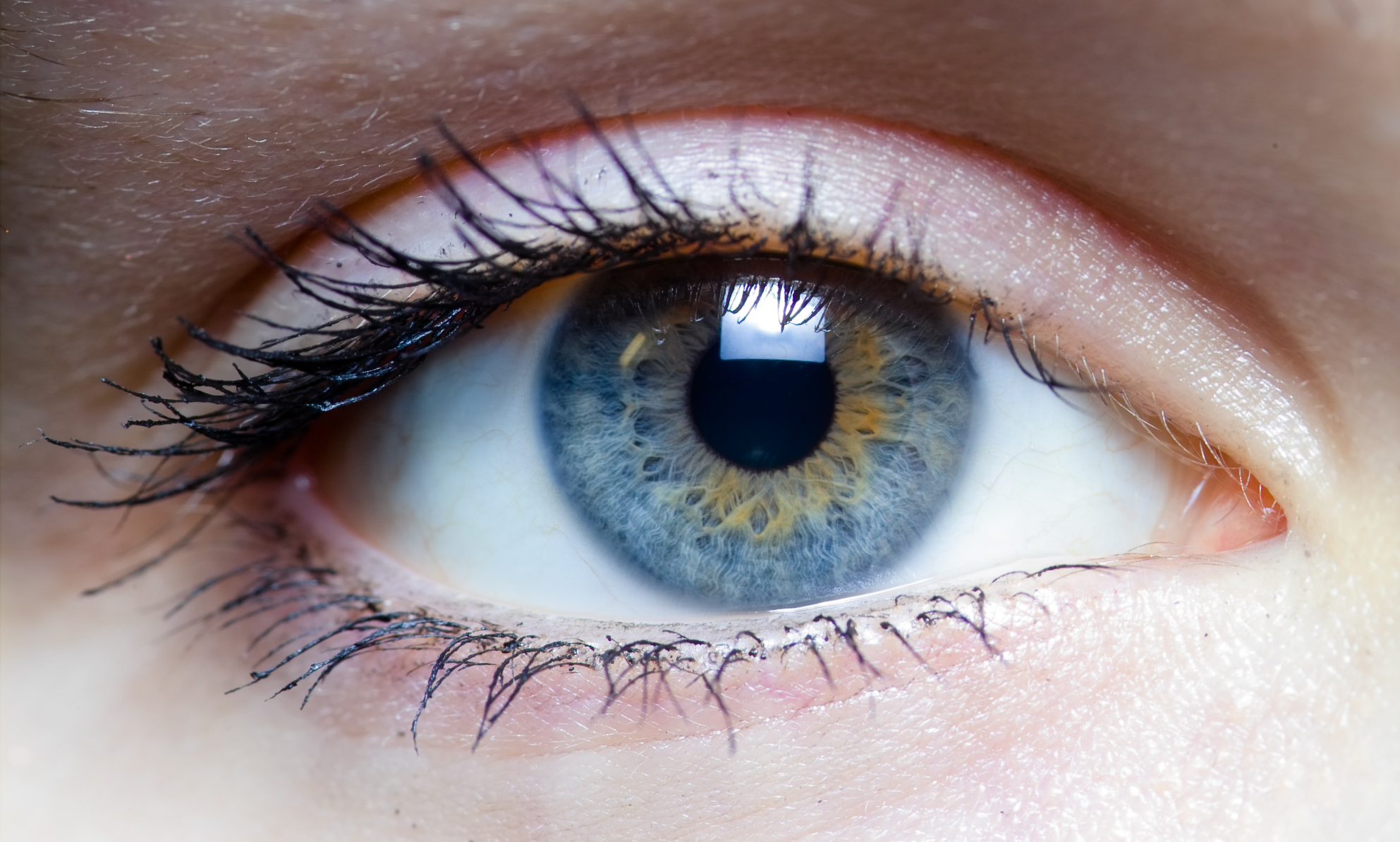
    • Eyes - Color and shape. Are they lively, cold, dead, sparkling, humorous, etc.
    • Body type - Is the character muscular, lanky, stocky, skinny, plump, feeble, etc. This can show age, what kind of work a character does, if they're well off. What words you choose are important. Different words for the same trait can bring forth negative or positive connotations, so think about what message you want to send to readers and how you want them to feel. Are they tall, short or average? 


    •  These aspects instantly give readers a way to separate the characters in their mind and build an image of them. Depending on the circumstances, a character's physical appearance can affect how they're perceived or how they see themselves. Each descriptor can cause challenges or ease. If your character has the same eye color as everyone else, it might make them feel safe, or ordinary. They might like or hate blending in. In Keeper of the Lost Cities Sophie Foster grows up having her brown eyes be ordinary, but after learning the truth about who she is, she then lives among her people where no one else has brown eyes. She hates the attention! A tall person may be able to see over crowds, but finding clothes could be a nightmare. A short person may fit in with the people around the, but be suddenly in a position where they are wishing they could reach that tree branch or jump over a gap that their legs can't make. Different cultures will react differently to people who are skinny or overweight. I would die if I had to go on a cross-country journey. So what realistic advantages/disadvantages do a character's physical definitions give them?
  • Gender - The key thing with this again is how each gender is thought of in the society you've written, whether it's based in a realistic setting or one you've created. Are the genders seen as equal? Does one tend to fill certain roles in society more than the other? Is any character doing something considered non-traditional for their gender?

[Story note: The number of key women in Heart of the Winterland vastly outnumber the prominent men. Don't ask me why, the story wrote itself that way. And the genders are considered equal. Though I can see it being a fun challenge to make an unequal society in a future book, for now I'm happy letting characters be themselves without bumping into people who think men/women shouldn't/can't do x.]
  • Race - Also pretty self-explanatory. This can be anything from writing realistic fiction that uses the many races and ethnicities that exist in our world, to creating your own. This is tricky in fantasy(barring urban fantasy) because "europeans/africans/asians/etc" don't exist in fantasy worlds since there isn't a Europe or Asia, etc. But that doesn't mean we don't/can't base our character's fictional race on an existing one.
[For Winterland I predominately based my two fictional races on Western Europeans and Asians(with most of the influence coming from China/Japan).]
    • The tricky thing with race is that there's no winning. I've seen people get huffy because a story is mostly x race. Or the one or two characters from a different race are portrayed in a way they don't like. It does make it tempting as an author to be like ARGH, forget racial diversity! Here's the key for me with any type of fiction. If you're writing realistic fiction/urban fantasy, then yes, give credit to the influences each race has on their culture, but also factor in their PERSONAL situation. Where were they born? Raised? Who raised them and what were they like?

    • Then there's the freedom that comes with fantasy. I get to decide what life is like for each race, what their culture is, how they're seen by other people, etc.There still needs to be a good flavor of individuality in each. What holidays do they celebrate? What do they see as a priority in life? What kind of food do they eat? What do they wear? etc.
    • Here is one of the most important things I can say about this, because I see a lot of people worrying about this: Write a person. This goes back to my writing people theme. If you write a black character and name them John Smith and they are a high-end lawyer who listens to country music and settled down in the country, someone somewhere might say you've white-washed the character. If you create LaKeisha the loud and sassy black woman who's living in the inner city and working at the local diner when she's out out grooving(do people still groove?) with her girlfriends at the club playing rap music, then you'll be accused of stereotyping.

    • People, I warn you, you'll never please everyone. You'll never make everyone happy. So don't try. Write your character as a person whatever traits and features you give them. Because there are black people out there, real people, who fit into a John or LaKeisha box. Traits do not belong solely to one race or another, making it impossible for John to be John. And just because 
  • Clothing - Whatever the setting, there'll be clothing that is fashionable or not. There'll be clothing that gets associated with a certain group of people. Pajamas in public will probably never be seen as classy, I'm sad to say. What are the character's clothes made of? Are they well-worn? The wrong size? Do they wear something new every day or the same thing? What colors are they wearing? Culture can often dictate what fabrics, colors, or styles can be used by which people. Laborer's will most likely not be wearing the same thing as scholars.

Balanced Differences
  • Positions - this is anything from jobs, to ranks, to what role a person fills. 
    • How the character acts - This is what the character has learned through nurture or what they have chosen to maintain as a part of themselves because of their upbringing. A princess may speak more formally than a street rat. How they perceive meals, lodging, clothing, personal hygiene can easily be affected by what is their normal. A boy trying to support a sick mother and little sister might jump at the chance to earn day old bread, while a duchess may be upset that her bread didn't come with the right side of jam. 

    • How others see the character - Will your character be treated poorly or with deference by the people around them? Are they respected because of their position, or scorned for their poverty? A character might be a slave who's treated like furniture, or the only child of a powerful ruler and treated as glass.

  • Disabilities - These are impairment that may be physical, cognitive, intellectual, mental, sensory, developmental, or some combination of these that results in restrictions on an individual's ability to participate in what is considered "normal" in their everyday society.
  • Disorders - A wide range of conditions that affect mood, thinking, or behavior. These can range from mild to extreme. Depression, anxiety, dementia, PTSD, bipolar, and narcissistic personality disorder are all examples that fall in this category. These do not change no matter the genre, though society's perception of them or treatments will vary. 

  • Diseases and defects - Let it be known that I hate the word defect. I'm not sure why, but it hits me with a lot of negative connotations that may be the result of personal experience. First, let me say that these are not the same thing, but fall in the range of medical conditions and that's why I'm putting them together.
    • Diseases are something we can't escape in real life, so there's a certain amount of realism that can be added to writing by not omitting something we all face. Colds or the flu anyone? People get sick, they just do. And people get deathly sick. I'm sure we've all had friends and/or family whose suffered through a terrible disease and possibly even died as a result. Is it contagious? 
    • Defects are an often-inherited medical condition that occurs at or before birth. Down Syndrome, club foot, and cleft lip/palate are some examples. 
  • Often disorders, disabilities, diseases, and defects will play a role in how a character goes through a story. What are they having to overcome? Maybe it's a family member to a key character who has one of these problems. Does that change how the character sees the world? How do they have to adapt? How does it change them? Do they let it define them? What situations are a lot more difficult to navigate because of this? Does what they have leave them tired, physically, emotionally, or mentally? 
  • But they also can make a difference in how others see them. Are they discriminated against? Seen as helpless? Are they constantly shielded or offered assistance? Are people nervous around them? Is the society one who believes these people have a right to life? Are they ostracized or believed to be a burden?
Self Differences
  • Motivation - What does a character want from life? What is their goal for this story? What makes them get up every day and keep going? Are they out for revenge? Do they have a family to provide for? Is someone counting on them? Do they yearn for adventure? 
    • Unique - what makes a character special? What makes them stand out in their own way? Is it their ability to see the good in people everyone else has given up on? A good leader, a good follower, a good listener. Compassion, empathy, strength, determination, a strong sense of responsibility. What makes us admire or despise your character? 
    • Setting - Where does a character live? Where have they spent most of their life?
      • Rural or Urban? - A person who's raised in the country will be different than one raised in downtown *insert big city*.  An urban character might be more comfortable around crowds, dealing with traffic, or the general bustle of the city. They may find the country too quiet or boring. A rural character might hate the smell and noise of the city. They may miss the space or seeing the stars. Maybe they feel safer in their own environment?
     
      • Modern, Future, or Medieval? - This can also dictate your characters speech, attire, or attitude. Think about what is expected of people at the time and how that affects what your characters will do.
    • Family
      • Members - Are the character's parents living or dead? What kind of influence are the parents? Does the character have siblings? What are their siblings like? Are they the only child, only boy/girl, youngest/oldest, etc? 
      • Expectations - What do the guardians do for a living? Do they expect their child(ren) to follow in their footsteps? Do they want their child to aim higher and not be like them? Is their a position they're being trained for? What a character grows up having expected on them can be the driving force behind why they make decisions.
      • Society - Is there an aspect of the family that society judges the character on? Maybe there's a stigma against multiples or more than x amount of kids, or less than x amount of kids. Is it a multi-racial family? Did one of the parents marry outside of their social sphere?
      • Treatment - What is the relationship between the family members? Is there an abusive family member? Perhaps one of the parents is stubborn and so is the character. Do they butt heads? Does something in the past(perhaps the loss of a child, or a twin) make the parent withdraw from the character? The character could be a troublemaker who resents their parents attempts to get them on track.
    • Religion and personal beliefs
      • A persons morals, religion, or personal beliefs can greatly affect what a character does. One character may believe that everything is free for the taking and the real crime is thinking that they shouldn't be allowed to take what they want. Most villains won't see themselves as villains. Their morals will be skewed, but in their mind they'll be right. Whether you're creating your own religion or using an already established one, what your character believes will play a role in how they approach things and what they see as right or wrong.
    • Education  
      • What kind of education did the character receive? What about their parents/guardians? Were their parents pushing them to achieve more academically? Or were they more of the "school up to the age of 10 was good enough for me, so it's good enough for you." The kind of parents who find learning pointless or feel threatened by their child becoming smarter than they are.
      • A person raised by someone with a higher education or more money, will have different traits than someone on the other end of the spectrum. And then of course there's what they do with their own lives, did they seek to be something different than what their parents/guardians were? This can affect how a character talks, what they have for goals, if they're strengths lie in academic knowledge or street smarts. Maybe they can't read, but could survive off the land. 
    In writing this I kept adding more and more diverse points. I finally had to tell myself enough! So yes, I'm sure I missed some, but I needed to draw the line. I also know that MOST of these points can be expanded on enough to fill an entire post. (You're welcome to tackle it!) But because this is meant to be an all-inclusive post of the various ways you can promote diversity in characters, I've tried to keep each point fairly brief. There's hopefully enough there to give you ideas and spark deeper research.

    Which brings me to research! I hate research, but it's something that almost all writers need to do at some point. Regardless of genre, research is a necessary evil. I've spent a lot of time recently researching clothing and colors that may be restricted to certain classes in x time period in y country. Get some personal experience if possible. I was telling a fellow writer that I was thinking of buying what I dress my characters in and seeing what it'd be like to walk around in it. 

    Talk to people, read up on subjects, educate yourself. Everyone has a different set of experiences that plays a role in making them unique. We're all diverse and writing characters who are equally diverse doesn't have to be hard and shouldn't be a "token" character. Develop a character who feels like a real person and people shouldn't care if one aspect is the same. I'll read about all male characters if they're individuals. I'll read about all royalty if they're unique. I'll enjoy stories of people who are all short if they're diverse. I want diversity in my writing, along with other things of course. Create characters who I can laugh and cry with. 

    At the end of the day, write people and you will achieve diversity. 

    Friday, August 5, 2016

    Interview with Lynn Miller

    This month's interview is with paranormal writer, Lynn Miller, who's working on her series The Sons of Rebellion.


    Kristen - Thank you for joining me today, Lynn. When writing The Witch's Pride did you come across any specific challenges? What would you do differently the next time?

    Lynn - I’ve learned so much about story structure over the course of writing this book. I’m hoping things will get easier with The Angel’s Wrath and later books. Placing the backstory and world-building became an integral part of the learning curve for me and something I hope to take forward into future stories.


    Kristen - What do your family and friends think of your writing?

    Lynn - I have the most supportive best friend around. She goes around introducing me as her author friend. I think she may well be more excited than I am for me to finish The Witch’s Pride. My husband is my proof reader at the moment and very supportive. Though, he does give me that blank stare when I talk about Point of View and Character Arcs. My daughter’s a teenager, the story is not about her, she has no interest.

    Kristen - Don't you love the kind of friends who are more excited than you(or just as excited) about your book being finished! And I laughed about your daughter. 


    When did you decide to become a writer?

    Lynn - I never decided. I’ve always loved telling stories and making up worlds and characters. I would set up scenes with my Barbies every night before I fell asleep, then play them out the next day. I started committing my stories to paper in my teens but only decided to start taking it seriously in the last few years.

    Kristen - We didn't have a lot of Barbies as kids, but we did have these paper dolls that we played with all the time. They had complex stories and all of this extended family. 


    Which famous person, living or dead would you like to meet and why?

    Lynn - Well, I’ve actually met Nelson Mandela. That experience was as awesome as everyone says. (I have an anecdote here, but it’s lengthy. Let me know if you want it) I would like to meet Joss Whedon. I think him and I could have a thing or two to talk about.


    Kristen - Of all the characters you’ve created, who has been your favorite.

    Lynn - Jet’s brother Adi. He will get his own book later down the line and his is probably the one I am most excited about. Adi is common theme in all the stories I’ve written. Sure his name and details change with each story, but there is always an Adi. Annoyingly intelligent and awkwardly caring.

    Kristen - Some personalities you can't help but fall in love with and it's so cool that you've found a way to work one of your favorite's into a new character for all of your stories!


    Thank you for answering some questions for me and good luck with your writing!


    Lynn Miller lives in Johannesburg, South Africa. Her love for storytelling started before she was able read or write but she only found the time to pursue this lifelong passion once she sold her software business. Her magical tales weave the blurred grey between good and evil with love, family and friendship.When she’s not writing, you can find her curled up with a cup of coffee and her kindle. She has always enjoyed both Romance and Urban Fantasy, and she writes in the genre that encompasses both: Paranormal Romance. She’s an outdoorsy city girl - comfortable at a campsite with her family or enjoying cocktails with her girlfriends.

    Don't forget to check Lynn out on social media!

    Check out her website!
    Follow her on Twitter!