Showing posts with label writing. Show all posts

Monday, December 19, 2016

Author Interview with Becca Patterson

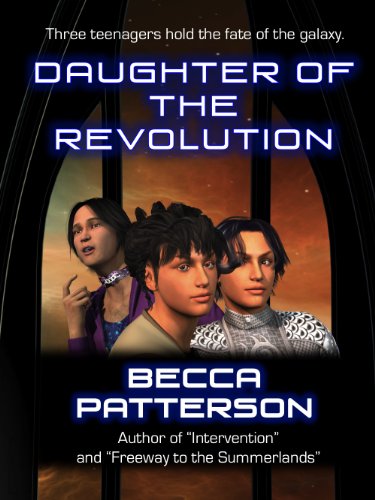
This month I'm interviewing Becca Patterson! Becca has authored several books such as Daughter of the Revolution.
Daughter of the Revolution cover.jpg

Kristen - Thank you so much for joining me today, Becca. One of the new "things" in publishing is book trailers. What do you think of “trailers” for books?

Becca - I think it’s a rather odd concept, but if it works go for it. I’ve not been sold on any book by it’s “trailer” though I have found trailers for books I want to read and watched them. They can be fun and provocative, but they don’t tell me much about what the book is going to be like.

For a movie, showing little snippets of the movie in a seriously shortened arc that doesn’t reveal the end make a whole lot of sense. The trailer is a closely related medium to the the work in question. A book, though, is all about the words written on the page. It would be great if you could get actors to portray the characters in the way that a movie does, but that would be expensive. So most trailers are made of quotes from the book or about the book. They look like an automated slide show, usually with some music playing in the background.

Kristen - I feel much the same as you do. I think they're interesting, but haven't been sold on a book over them. Right now at least, the best ones do have actors and I just saw the pricetag on one recently and *whistles* I was like, "Okay, so I'm never affording one of those."


One of what I think is the best parts about being an author is the people who fall in love with your work. What do your fans mean to you?

Becca - My fans are the reason I publish. I write for myself, but I edit and polish and make it perfect for my fans. They deserve the best I have to offer, so I will give it to them.

The fun part for me, is that I work with a group of my fans. I work in a high school, and my books are in the library. I get to watch the frenzy when the kids know that I’ve released another book and they are waiting for the librarian to get it checked in for the first time. Then once they start reading it there are cries of “no spoilers” from the ones who haven’t read it yet when it comes up in conversation. I suspect not many authors get that kind of view of their fans.


It’s a double edged sword though. I love my fans dearly, but I could do with a little less nagging to get the next book out.

Kristen - Aww, that is so amazing! That sounds like the greatest confidence booster. That'd give me all the warm fuzzies. I've got only one person who harassed me about getting the next book out, and I'm just imagining her several times over and sending you lots of sympathy. :D


The writing process is a long one and after awhile I know I find myself going "no more! please!" After that first draft, do you let the book stew – leave it for a month and then come back to it to edit?

Becca - It’s usually more than a month, but yes. Once I finish a first draft I can’t edit it right away. I still remember too much about what I meant to say, which makes it hard to see where I didn’t say that. Also, I need time for my writing skills to mature between the draft and the edit.

Really though the truth is I write fast and edit slow. I have more drafts complete than I know what to do with, but I can’t just stop writing. So I finish a draft and add it to the waiting list for edits. There are, I think, seven books in there right now. Sometimes I find that a novel just doesn’t make the cut when it comes up for edits. It’s sad when that happens, but I put it away and move on to the next one. By the time some books come up in rotation they are already two years old and wow, I really didn’t know how to write back then.

That’s what editing is for.


Kristen - How do you develop your stories?

Becca - For short stories, I start with a character and a goal and just write my way to the end. Then I have to go back and make sure it all makes sense, but that’s doable with a short story.

Novels start sort of the the same. They come to me as a character and a goal. Then they bring in some secondary characters, with different goals and a villain with an opposing goal and then I know I have a mess. I do character interviews to sort everything out and get a good feel for the world they are living in. Once I start writing the novel it’s pretty much the same as a short story - I start writing and stop when I get to the end. Then go back and make sure it all makes sense. It just takes a little longer.


The real big difference is the number of short stories worth editing is somewhere around 15% where at least 75% of my novels are worth editing.


Kristen - What is the easiest thing about writing?

Becca - The easiest thing about writing is: writing.

The initial draft flows from my fingers so willingly. If only that were all it took. I have thousands of short stories, in first draft form. They will never be anything more than that. I wrote them just to write. To feel the flow of words and see the thoughts in my head become life. It’s how I imagine magic feels.

The next best thing about writing is hearing how much people liked your story. It’s good that those two are on the ends, otherwise I’m not sure I’d make it through the middle.

Kristen - I loooove writing the first draft. And usually the second isn't too bad because i have so many plot holes to fix. But after that I'm like nooo, can't I just write the first draft and someone else can polish them?

Thank you for joining me today. Good luck with your writing and hope you have a Merry Christmas!


kitty-400px.pngSci-Fi and Fantasy are just two of Becca Patterson's preferred genres. An author hailing from Minnesota, she has been writing for as long as she can remember, and takes much of her inspiration from the teenagers she works with. In her spare time, Becca enjoys making her husband laugh, and playing string with her three cats. 

Follow her on Twitter
Read more on her blog
Follow her on Amazon

Friday, December 16, 2016

Diversity in Fiction

Writers hear all the time how we should be diverse in terms of what we write and our characters. Our stories should be unique, not cliche. They should hold diverse characters. So what does diverse mean? I'd argue there's no flat rule for what diverse is. Everyone hears diverse and pictures something different.

Though my kids will eat just about anything, they really like PB&J to the point where they have it for lunch every day.

I use a different jelly every week to make lunch diverse. My husband thinks I'm crazy and states that grape jelly is the only proper jelly to be paired with peanut butter. I'm happy to say though that the kids are happy with the apricot, orange, lemon, pineapple, mint, apple, fig, and you name it jellies I've used.

Being diverse doesn't always mean "kids have to eat something different every day", it could mean they're having a different fruit for breakfast this week, or a different jelly for lunch.

Imagine you're reading a book and every character is the exact same. It's possible for people to share some traits. But if you can't tell the difference between two people because their dialogue sounds the same and they have the exact same ambitions that they're trying to achieve in the exact same way, that's boring!

So we diversify in various ways, but what really counts is that characters are different in some way. Diversity is important in every genre, be it fantasy, historical fiction, romance, sci-fi, etc. Some genres will require you to adhere to what was true of that time period or if it's a modern setting, the same. But you can still have people who are unique and different without making them a dragon or blue-skinned alien.

One of my favorite sayings is "Write people" and that's what I believe will naturally make characters diverse. If you focus on writing characters that are "people" with depth and motives and hopes and fears and dreams, they'll naturally be diverse because you don't need to look very far to see that real people ARE diverse.

I've broken down difference into three main groups: Surface differences, Balanced differences, and Self differences. Don't think too much about my terms, I'm just coming up with ones that hopefully fit.

Surface differences are the things that mostly affect what other characters think about that character. They may have a measure of affect on how the character's story plays out, how they see themselves, etc. But most of what a character encounters, good or bad, when dealing with surface diversity is based on another character's perception of them.

Balanced differences are aspects of a character that affect how other characters see them and actual differences at a deeper level. These are things that, like physical differences, may have a character face adversity or have an easier road, but also do impact who a character is inside.

Self differences are diverse aspects of a character that affect who the character is and how they'll approach the world.

To note, there will be some crossover in all categories! I'm not creating hard lines, but trying to establish basic parameters. Obviously a surface difference could be something a character internalizes and makes a central part of the "why" when it comes to their actions. And a self difference could result in another character judging that person based on that difference.

Surface Differences
  • Physical - What do your characters look like? 
    • Hair - What color is it? How does the character style or cut it? A character's hair color may be cause for prejudice in your story. The way they cut and style it might be a key to their background or indicate something about themselves. 
    • Eyes - Color and shape. Are they lively, cold, dead, sparkling, humorous, etc.
    • Body type - Is the character muscular, lanky, stocky, skinny, plump, feeble, etc. This can show age, what kind of work a character does, if they're well off. What words you choose are important. Different words for the same trait can bring forth negative or positive connotations, so think about what message you want to send to readers and how you want them to feel. Are they tall, short or average? 


    •  These aspects instantly give readers a way to separate the characters in their mind and build an image of them. Depending on the circumstances, a character's physical appearance can affect how they're perceived or how they see themselves. Each descriptor can cause challenges or ease. If your character has the same eye color as everyone else, it might make them feel safe, or ordinary. They might like or hate blending in. In Keeper of the Lost Cities Sophie Foster grows up having her brown eyes be ordinary, but after learning the truth about who she is, she then lives among her people where no one else has brown eyes. She hates the attention! A tall person may be able to see over crowds, but finding clothes could be a nightmare. A short person may fit in with the people around the, but be suddenly in a position where they are wishing they could reach that tree branch or jump over a gap that their legs can't make. Different cultures will react differently to people who are skinny or overweight. I would die if I had to go on a cross-country journey. So what realistic advantages/disadvantages do a character's physical definitions give them?
  • Gender - The key thing with this again is how each gender is thought of in the society you've written, whether it's based in a realistic setting or one you've created. Are the genders seen as equal? Does one tend to fill certain roles in society more than the other? Is any character doing something considered non-traditional for their gender?

[Story note: The number of key women in Heart of the Winterland vastly outnumber the prominent men. Don't ask me why, the story wrote itself that way. And the genders are considered equal. Though I can see it being a fun challenge to make an unequal society in a future book, for now I'm happy letting characters be themselves without bumping into people who think men/women shouldn't/can't do x.]
  • Race - Also pretty self-explanatory. This can be anything from writing realistic fiction that uses the many races and ethnicities that exist in our world, to creating your own. This is tricky in fantasy(barring urban fantasy) because "europeans/africans/asians/etc" don't exist in fantasy worlds since there isn't a Europe or Asia, etc. But that doesn't mean we don't/can't base our character's fictional race on an existing one.
[For Winterland I predominately based my two fictional races on Western Europeans and Asians(with most of the influence coming from China/Japan).]
    • The tricky thing with race is that there's no winning. I've seen people get huffy because a story is mostly x race. Or the one or two characters from a different race are portrayed in a way they don't like. It does make it tempting as an author to be like ARGH, forget racial diversity! Here's the key for me with any type of fiction. If you're writing realistic fiction/urban fantasy, then yes, give credit to the influences each race has on their culture, but also factor in their PERSONAL situation. Where were they born? Raised? Who raised them and what were they like?

    • Then there's the freedom that comes with fantasy. I get to decide what life is like for each race, what their culture is, how they're seen by other people, etc.There still needs to be a good flavor of individuality in each. What holidays do they celebrate? What do they see as a priority in life? What kind of food do they eat? What do they wear? etc.
    • Here is one of the most important things I can say about this, because I see a lot of people worrying about this: Write a person. This goes back to my writing people theme. If you write a black character and name them John Smith and they are a high-end lawyer who listens to country music and settled down in the country, someone somewhere might say you've white-washed the character. If you create LaKeisha the loud and sassy black woman who's living in the inner city and working at the local diner when she's out out grooving(do people still groove?) with her girlfriends at the club playing rap music, then you'll be accused of stereotyping.

    • People, I warn you, you'll never please everyone. You'll never make everyone happy. So don't try. Write your character as a person whatever traits and features you give them. Because there are black people out there, real people, who fit into a John or LaKeisha box. Traits do not belong solely to one race or another, making it impossible for John to be John. And just because 
  • Clothing - Whatever the setting, there'll be clothing that is fashionable or not. There'll be clothing that gets associated with a certain group of people. Pajamas in public will probably never be seen as classy, I'm sad to say. What are the character's clothes made of? Are they well-worn? The wrong size? Do they wear something new every day or the same thing? What colors are they wearing? Culture can often dictate what fabrics, colors, or styles can be used by which people. Laborer's will most likely not be wearing the same thing as scholars.

Balanced Differences
  • Positions - this is anything from jobs, to ranks, to what role a person fills. 
    • How the character acts - This is what the character has learned through nurture or what they have chosen to maintain as a part of themselves because of their upbringing. A princess may speak more formally than a street rat. How they perceive meals, lodging, clothing, personal hygiene can easily be affected by what is their normal. A boy trying to support a sick mother and little sister might jump at the chance to earn day old bread, while a duchess may be upset that her bread didn't come with the right side of jam. 

    • How others see the character - Will your character be treated poorly or with deference by the people around them? Are they respected because of their position, or scorned for their poverty? A character might be a slave who's treated like furniture, or the only child of a powerful ruler and treated as glass.

  • Disabilities - These are impairment that may be physical, cognitive, intellectual, mental, sensory, developmental, or some combination of these that results in restrictions on an individual's ability to participate in what is considered "normal" in their everyday society.
  • Disorders - A wide range of conditions that affect mood, thinking, or behavior. These can range from mild to extreme. Depression, anxiety, dementia, PTSD, bipolar, and narcissistic personality disorder are all examples that fall in this category. These do not change no matter the genre, though society's perception of them or treatments will vary. 

  • Diseases and defects - Let it be known that I hate the word defect. I'm not sure why, but it hits me with a lot of negative connotations that may be the result of personal experience. First, let me say that these are not the same thing, but fall in the range of medical conditions and that's why I'm putting them together.
    • Diseases are something we can't escape in real life, so there's a certain amount of realism that can be added to writing by not omitting something we all face. Colds or the flu anyone? People get sick, they just do. And people get deathly sick. I'm sure we've all had friends and/or family whose suffered through a terrible disease and possibly even died as a result. Is it contagious? 
    • Defects are an often-inherited medical condition that occurs at or before birth. Down Syndrome, club foot, and cleft lip/palate are some examples. 
  • Often disorders, disabilities, diseases, and defects will play a role in how a character goes through a story. What are they having to overcome? Maybe it's a family member to a key character who has one of these problems. Does that change how the character sees the world? How do they have to adapt? How does it change them? Do they let it define them? What situations are a lot more difficult to navigate because of this? Does what they have leave them tired, physically, emotionally, or mentally? 
  • But they also can make a difference in how others see them. Are they discriminated against? Seen as helpless? Are they constantly shielded or offered assistance? Are people nervous around them? Is the society one who believes these people have a right to life? Are they ostracized or believed to be a burden?
Self Differences
  • Motivation - What does a character want from life? What is their goal for this story? What makes them get up every day and keep going? Are they out for revenge? Do they have a family to provide for? Is someone counting on them? Do they yearn for adventure? 
    • Unique - what makes a character special? What makes them stand out in their own way? Is it their ability to see the good in people everyone else has given up on? A good leader, a good follower, a good listener. Compassion, empathy, strength, determination, a strong sense of responsibility. What makes us admire or despise your character? 
    • Setting - Where does a character live? Where have they spent most of their life?
      • Rural or Urban? - A person who's raised in the country will be different than one raised in downtown *insert big city*.  An urban character might be more comfortable around crowds, dealing with traffic, or the general bustle of the city. They may find the country too quiet or boring. A rural character might hate the smell and noise of the city. They may miss the space or seeing the stars. Maybe they feel safer in their own environment?
     
      • Modern, Future, or Medieval? - This can also dictate your characters speech, attire, or attitude. Think about what is expected of people at the time and how that affects what your characters will do.
    • Family
      • Members - Are the character's parents living or dead? What kind of influence are the parents? Does the character have siblings? What are their siblings like? Are they the only child, only boy/girl, youngest/oldest, etc? 
      • Expectations - What do the guardians do for a living? Do they expect their child(ren) to follow in their footsteps? Do they want their child to aim higher and not be like them? Is their a position they're being trained for? What a character grows up having expected on them can be the driving force behind why they make decisions.
      • Society - Is there an aspect of the family that society judges the character on? Maybe there's a stigma against multiples or more than x amount of kids, or less than x amount of kids. Is it a multi-racial family? Did one of the parents marry outside of their social sphere?
      • Treatment - What is the relationship between the family members? Is there an abusive family member? Perhaps one of the parents is stubborn and so is the character. Do they butt heads? Does something in the past(perhaps the loss of a child, or a twin) make the parent withdraw from the character? The character could be a troublemaker who resents their parents attempts to get them on track.
    • Religion and personal beliefs
      • A persons morals, religion, or personal beliefs can greatly affect what a character does. One character may believe that everything is free for the taking and the real crime is thinking that they shouldn't be allowed to take what they want. Most villains won't see themselves as villains. Their morals will be skewed, but in their mind they'll be right. Whether you're creating your own religion or using an already established one, what your character believes will play a role in how they approach things and what they see as right or wrong.
    • Education  
      • What kind of education did the character receive? What about their parents/guardians? Were their parents pushing them to achieve more academically? Or were they more of the "school up to the age of 10 was good enough for me, so it's good enough for you." The kind of parents who find learning pointless or feel threatened by their child becoming smarter than they are.
      • A person raised by someone with a higher education or more money, will have different traits than someone on the other end of the spectrum. And then of course there's what they do with their own lives, did they seek to be something different than what their parents/guardians were? This can affect how a character talks, what they have for goals, if they're strengths lie in academic knowledge or street smarts. Maybe they can't read, but could survive off the land. 
    In writing this I kept adding more and more diverse points. I finally had to tell myself enough! So yes, I'm sure I missed some, but I needed to draw the line. I also know that MOST of these points can be expanded on enough to fill an entire post. (You're welcome to tackle it!) But because this is meant to be an all-inclusive post of the various ways you can promote diversity in characters, I've tried to keep each point fairly brief. There's hopefully enough there to give you ideas and spark deeper research.

    Which brings me to research! I hate research, but it's something that almost all writers need to do at some point. Regardless of genre, research is a necessary evil. I've spent a lot of time recently researching clothing and colors that may be restricted to certain classes in x time period in y country. Get some personal experience if possible. I was telling a fellow writer that I was thinking of buying what I dress my characters in and seeing what it'd be like to walk around in it. 

    Talk to people, read up on subjects, educate yourself. Everyone has a different set of experiences that plays a role in making them unique. We're all diverse and writing characters who are equally diverse doesn't have to be hard and shouldn't be a "token" character. Develop a character who feels like a real person and people shouldn't care if one aspect is the same. I'll read about all male characters if they're individuals. I'll read about all royalty if they're unique. I'll enjoy stories of people who are all short if they're diverse. I want diversity in my writing, along with other things of course. Create characters who I can laugh and cry with. 

    At the end of the day, write people and you will achieve diversity. 

    Friday, October 28, 2016

    The Truth About Winter - Short story

    Around wintertime I often end up discussing winter with my friends around the world and everyone's got a different notion of winter. For those without snow, or little of it, there's this romanticized idea of winter. There's the pretty postcards and pictures, the movies and commercials. Everyone things are trying to "sell" the idea of a white winter. But the truth is, winter sucks. It does. Now I'll say that people who live with a real winter don't all hate it, but I do.

    What winter means to me is layers of clothing, yet rarely warm, heating bills, higher electric bill, scraping ice, shoveling snow, dangerous roads, getting stuck while driving, snow plow costs, etc. Winter is expensive, dangerous, tiring, and just plain miserable. I love my state, but I hate winter.

    So I got this idea for a story about my character Cali from Heart of the Winterland that takes place within the first chapter of the book, or so I imagine, where the enchantment is lifted and Cali is thinking clearly and she's now suffering through winter without the spell to keep her happy. I tried to put a humorous twist on it, while showing some of the nasty truths of winter that hopefully people who've experienced that can identify with Cali's day.

    ----------------------------------------------------------------

    “Ouch!” Princess Calisandra popped her stinging fingers in her mouth.

    “Princess! Are you alright?” Cali’s guardian, Voice, darted over and hovered anxiously around her. “Let me see. They might be broken.”

    Cali glared at Voice and refused to take her hand from her mouth, even though she now felt rather silly standing there with her mouth full of fingers.

    “Don’t be stubborn. You’ve been so cantankerous lately,” Voice scolded.

    Finally yanking her fingers out, and shoving them behind her back, Cali waved the orb away. “I’m fine, Voice. I just slammed them in the door.” She snatched the cloak from the hook by the door—the reason she’d come back inside in the first place—and making sure Voice didn’t get a peek at the hidden hand, she backed out the door, this time without pinching her fingers.

    Safely outside, Cali turned on the top step and adjusted her cloak hastily. Snow fell from the sky—when didn’t it?—and a sharp wind whipped around the castle.

    “Stupid horses. Why can’t Voice just use her magic to feed them?” she muttered to herself as she stomped down the stairs. Switching her tone to match Voice’s she continued, “It is about responsibility, Princess.”

    Her boot hit the next step and she slipped. Arms waving in the air as she fought to keep her balance, Cali tumbled backwards and landed on her butt. Pain radiated through her tailbone and rolled onto her stomach, burying her face against the snow-covered step. The same evil step that’d caused her fall.

    “I hate this country,” she groused.

    The pain settled down to a low thrum, and deciding she’d had quite enough of the steps digging into her face and stomach, she rose and more carefully this time, continued the rest of the way down.

    More snow had fallen over night, and the path she’d carefully cleared yesterday was gone, the snow now up to her thighs. She plowed through the powder, feeling it creep into her fur-lined boots.

    She’d almost reached the stables when she tripped . . . again. The snow rushed up to greet her and she thrust out her arms to catch herself. Not that it mattered— with how deep the snow was—she still ended up buried.

    “Blast it all.” She pushed herself to her knees and reached for whatever had tripped her. A broom. Of course. She’d wondered where that’d gone. Belia, one of the mares, had a habit of confiscating various implements from the stable and leaving them in different locations.

    Since she couldn’t exercise all of the horses each day, Cali would open the stall doors and let the horses play out in the courtyard. Most of them thought rolling in the snow and kicking it in the air was more than enough fun, but some, like Belia, thought their time could be better spent.

    “Stupid horse,” she muttered, picking the broom and herself up. Snow frosted her entire front and her hood had fallen off. She absentmindedly flipped the hood back up and too late discovered it was full of snow from her most recent fall. Snow plopped onto her head and fell down over her face. She reached up to rub her eyes clear and was rewarded with a soaked mitten that removed the snow, but left a wet streak across her face for all of two seconds before it froze.

    She looked back at the castle and saw Voice hovering in the window. The orb darted behind the curtains when she saw Cali glance her way. “Oh, sure, like I didn’t see her there watching,” Cali grumbled. There was no way she could go back now. Whatever dignity she had left needed to be salvaged.

    Broom in hand, Cali made it the rest of the way to the stables without incident. She kicked the snow away from the stable door, and pulled it open just enough to squeeze inside. Musty, hay-scented air greeted her, aggravating her nose until she sneezed.

    Sniffing from both dust, hay, and the cold, Cali stuck the broom back in its proper corner and glared down the center of the stable where a grey mare poked her head out.

    “If I wanted this laying out in the snow, I’d put it there myself,” she said crossly to the horse who tossed her head unremorsefully.

    She pulled off her snow-filled mittens and threw them on a pail. Her hands were red from cold and she blew on them to warm them a bit before starting her work.

    Cali wandered down the row, opening the stalls one at a time and checking on the horses. The work had its own monotonous rhythm. Stalls needed to be cleaned, horses needed to be checked, food and water replenished, and if all went well, there’d be no disasters. No injuries or illnesses, no horses pushing her into a bucket of water or a pile of manure. Today went well.

    She loosed the horses into the courtyard so they could exercise. Normally she liked their antics, but today nothing cheered her up.

    One of the colts frolicked past her and kicked snow into her face. She spit it out and glared at the young horse. Totally unconcerned, he went racing back towards his mother.

    She brought them back into their stalls after a bit, not wanting to stay out very long. After making sure the broom was in its usual place and the horses were brushed clear of snow and safely tucked into their clean stalls, she backed out of the stable and shut the door.

    The snow had covered part of her tracks from earlier and she had to forge a new path. More snow fell into her boots, and the snow that had fallen in her gloves earlier had melted while in the warm stables. Soggy gloves were about as useful as chipmunks in the larder.

    At last she stomped up the steps and into the castle. The layers were peeled off one by one. First the semi-frozen mittens that had chunks of wet snow clinging to them. Then the snow-covered cloak, and her boots which resembled blocks of snow. She threw the lot in front of the nearest fireplace and sat down to remove her wet stockings, compliments of the snow that’d invaded her boots and then melted.

    She shivered as she rushed to her bedroom. The lower part of her pants were soaked and even though her tunic had escaped most of the weather’s damage, it too lay cold against her skin.

    As soon as she reached her room, she began stripping down to her undergarments as she hurried to the adjoining washroom. Voice always had a hot bath drawn to greet her after her stable chores. Sure enough, she bumped the door open with her shoulder—still removing one of her pant legs—and saw the steaming bath.

    Leaving her pants to lie in the doorway, she finished undressing and climbed into the tub with much wincing and “Ooh, hot! Hot!”

    As she adjusted to the heat, she settled back and washed the ice crystals from her face and gave a sniff. At least the dripping nose would be gone in a few hours, if she was lucky. Sometimes it turned into a full out cold and she was stuffed up and miserable for weeks.


    Cali buried her face in her hands. “I’ve got to get out of this country. If the weather doesn’t kill me, I’ll die of boredom.”


    Sunday, July 31, 2016

    Camp NaNo Results


    And there it is! All pretty and shiny. Freshly stolen of the page of some poor sop who . . . just kidding! It did occur to me that someone could take that off a Google search of someone else's social media post. 

    If you remember, I set my goal for 10k words. To help with some perspective in the 14 months prior to July, I'd written approx. 20k words. Granted I was editing my first novel during that time, but I was definitely in a low in terms of non-editing writing. So when I set my goal for 10k I was really nervous. It was more writing than I'd done in a long time.

    This was my first camp and I got lucky with my cabin. There were a large number of people from my writing group who wanted to give camp a try and we got together and formed a cabin. 

    We did a lot of writing sprints, most in the form of 15 minutes of writing and then 15 minutes off. With my first book published and no need to worry about getting it to that point, I was able to focus all of my writer time on book 2.

    Knowing I had that goal was part of my encouragement, but most of it came from my friends(in cabin and out). Being able to write in tandem with others and know that they were expecting me to write during those sprints if I said I would was like . . . they were counting on me! I said I'd do something and I had to do it!

    That's how I looked at it anyway. And since I'm one who tries to do what she says and not let people down, bar things I couldn't help, I sat my butt down and wrote.

    And here's my stats with 2 days left to go!

    My first two couple of days I was like, wow, this isn't so bad. And then at some point I kicked it up a notch and I may have hit 10k by day 8. Yeah, I was super stoked about that.

    Realizing how fast 10k words went, I decided to try and hit 20k. You can see I had a fairy level climb with a few flat days and a few super ambitious days. I tried to at least do 323 words a day(my original goal).

    About the last week, I just burned out(which you can probably see). But, by that point I'd flown past 20k as well and was starting to see that 30k was possible. Honestly, it took more willpower to finish that last 5k words on my way to 30k, which I hit on the 29th, than it did to accomplish the first 25k.

    I may do some more writing today, tomorrow I'll be at a birthday party and probably won't get anything done, so I'm wrapping up my post for NaNo today(Saturday) as I don't imagine I'll get much more done, if anything.

    Overall, I've loved the camp experience, and if I'm in the process of writing when future camps roll around, I'll probably join. I can't see myself ever doing the Nov. NaNo. 50k words is way beyond what I can do. 

    If you're looking for motivation, inspiration, or just people to write with for a month, I'd recommend joining camp! You can customize your goal(min of 1k words) and choose editing or writing. Camp ins't about whipping out a perfect novel in x amount of words. It's about seeing what you need to accomplish next and challenging yourself to do that within a month. Maybe it's your first draft, maybe it's editing your final draft. That short story you've been thinking of writing, or like me it might be that novel you're in the middle of. 

    I'm hoping to drag even more friends to the next camp! Because that's the next best part of camp, seeing other people accomplish their goals and/or kick out a bunch of words in a month. (There's also the letters one of my cabin mates writes to her mom. They're awesome.)

    Have you ever joined NaNo? What did you think? Did you join the July camp? How'd you do?

    Wednesday, June 29, 2016

    Camp NaNo and Interviews

    I'll be joining Camp NaNo in July for my first ever camp! I'm in a cabin with a group of writer friends as well as a few people I haven't met before. I'm excited to see how it goes. I set my goal at 10k words, which right now feels a bit daunting as (with the exception of the past 3-4 days) I've hardly done any writing that wasn't editing in months.

    While my husband was on a backpacking trip from Sunday-Wednesday, I spent the hours after the kids went to bed writing. My goal was to get back into the habit of writing every day so that my goal would be attainable.

    My pace has been slow compared to a lot of writers, but I'm happy for what I've been getting done and believe I have a plan to complete my 10k words and maybe beyond!

    In other news, I'll also be hosting writer and author interviews on the first Friday of every month, starting in July. It's been a lot of fun interviewing people and getting to know other writers and the way they work and their successes and struggles. I hope everyone enjoys reading the interviews every month.